
Anne Carson丨The Nobel Prize in Literature 2026
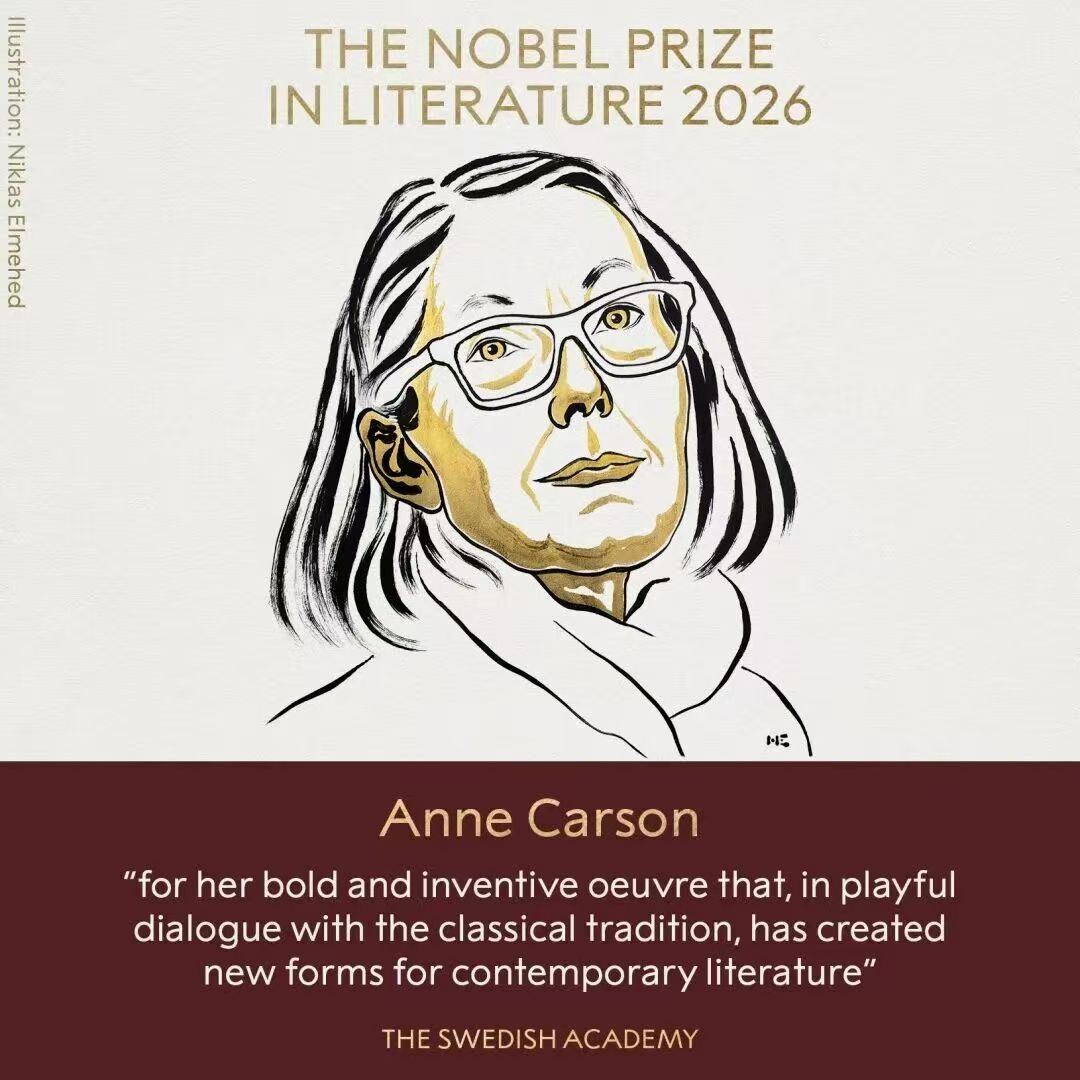
On October 8, Beijing time, the Swedish Academy announced that the 2026 Nobel Prize in Literature had been awarded to the Canadian author Anne Carson" for her bold and inventive oeuvre that, in playful dialogue with the classical tradition, has created new forms for contemporary literature."
🏆About author

Anne Carson is a Canadian poet, classical scholar, and translator who was born in Toronto in 1950. A classicist by training and a Sappho scholar by specialization, she struck out on a more adventurous path: turning classics into poetry, poetry into essays, and essays into installation art. Harold Bloom has called her "one of the geniuses of our time."
Her writing has always revolved around a single point of intersection: the philologist's obsession with words and the poet's longing for new meaning. Her point of departure is Sappho, Catullus, and Greek mythology, yet she is always speaking of contemporary love, loneliness, and loss. For her, the classical world is not a refuge but an instrument with which to calibrate the present.
📚Book Recommendation
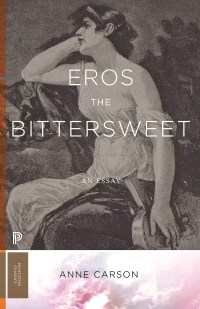
Eros the Bittersweet : An Essay
PQ4293.L2 C37 1986
Eros is a verb.
Carson's first book—the essential gateway to understanding all her later work. Taking as her starting point that fragment of Sappho — "Eros, the sweet-and-bitter creature" — she pursues a seemingly simple question: why is desire always bound up with distance? Her answer: desire is born of lack. Precisely because the other is not oneself and can never be fully attained, love becomes love. The book was named by the Modern Library as one of the "100 Best Nonfiction" works of all time. If you want to read just one Carson book to begin with, start here — it's very short, but you will keep coming back to it.
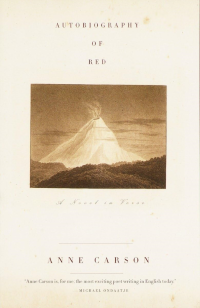
Autobiography of Red : A Novel in Verse
PS3553.A7667 C37 1999 / PS 3553 .A7667 C37 2021 v.2 CN
Reality is a sound,
you have to tune in to it not just keep yelling.
I will never know how you see red and you will never know how I see it.
In Greek mythology, Geryon is nothing but a monster to be disposed of — three heads, six arms, casually killed by Heracles, without even a sigh. Carson pulls him free of the ruins of heroic narrative and restores to him his red wings, his red skin, his red sensitivity. He becomes a boy who can have his heart broken, who has desires, who carries wounds. You will be surprised to find yourself grieving over the loneliness of a "monster." Red is no longer danger, but a way of being that is too intense—so pure it can scarcely survive. It was Carson's most famous verse novel — and the first book that made many readers fall in love with her.
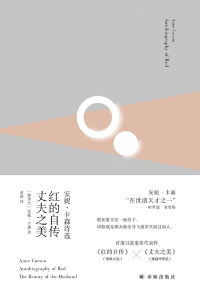
The Beauty of the Husband: A Fictional Eassy in 29 Tangos
PS 3553 .A7667 C37 2021 v.1 CN
Not ashamed to say I loved him for his beauty.
As I would again if he came near.
Clytemnestra, the woman who killed her husband Agamemnon, is sent by Carson into a psychologist's consulting room. An ancient murder case is retried within a psychoanalytic framework. The book consists of twenty-nine tangos—“a tango is like a marriage: once you begin to dance, you must dance until the music ends.” With this book, Carson became the first woman ever to win the T. S. Eliot Prize for Poetry. You don't need to understand Greek tragedy; You don't need to understand Greek tragedy; you only need to understand one thing: some marriages, as you dance on, turn into murder scenes. It is about betrayal, beauty, and destruction—and about how a person keeps dancing amid the ruins.
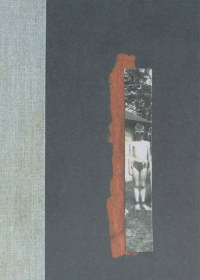
《夜》
Nox
PS3553.A7667 C37 2010
Prowling the meanings of a word, prowling the history of a person, no use expecting a flood of light.
Human words have no main switch.
In 2000, Carson's brother Michael died. Instead of writing a traditional elegy, she made a scrapbook: family letters, old photographs, sketches, dictionary entries, prose poems—pieced together into a tangible meta-elegy. The backbone of the book is Catullus's poem mourning his dead brother—Carson takes apart the Latin word by word, using dictionary definitions so that each word becomes an entry point to her brother. Reading this book is like watching someone piece the lost person back together from fragments of language, bit by bit. It is about loss, and about what language can and cannot do in the face of loss.
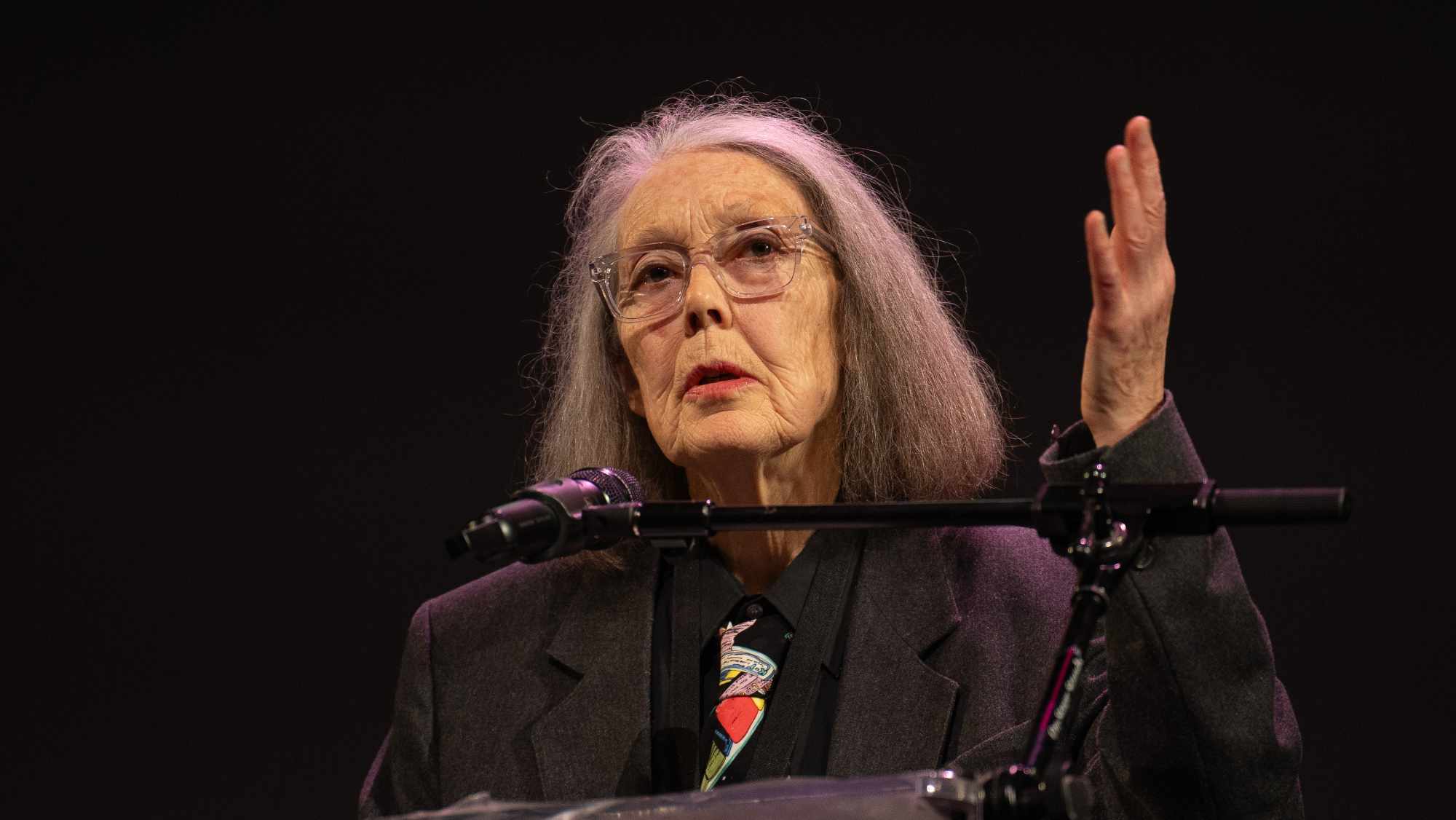
Anne Carson is not the kind of author you can read once and then put back on the shelf. Her books are short but extremely dense; the language seems clear on the surface, yet beneath it are interwoven fragments of ancient Greek, Latin dictionary entries, psychoanalytic frameworks, and pieces of private life. It is hard to finish in one sitting, and hard to fully understand in one reading. This is exactly where the advantage of borrowing from the library lies—you don't have to own it all at once, but you can come back to it again and again.
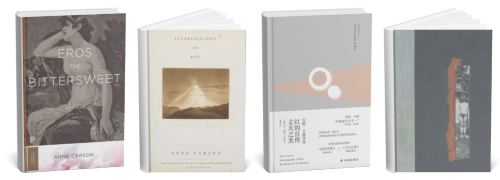
All the works by Anne Carson recommended here are available in the library's collection. Readers are welcome to come and borrow them.
Content | LIN Yujia & ZHOU Jiayi
Layout | LIN Yujia
First Review | TANG Lianyi
Second Review | HU Linxiao & GU Mengmeng
Third Review | REN Yuanyuan